

Creating an inviting outdoor space starts with selecting the right furniture materials. Whether you’re designing a spacious patio, a cozy balcony, or a charming garden, choosing the right material for your furniture can make it more beautiful and durable.
Our guide introduces common types of outdoor furniture materials, purchasing considerations, and maintenance tips. Read on to learn more and find the best material for outdoor furniture.
Comparison of Outdoor Furniture Materials
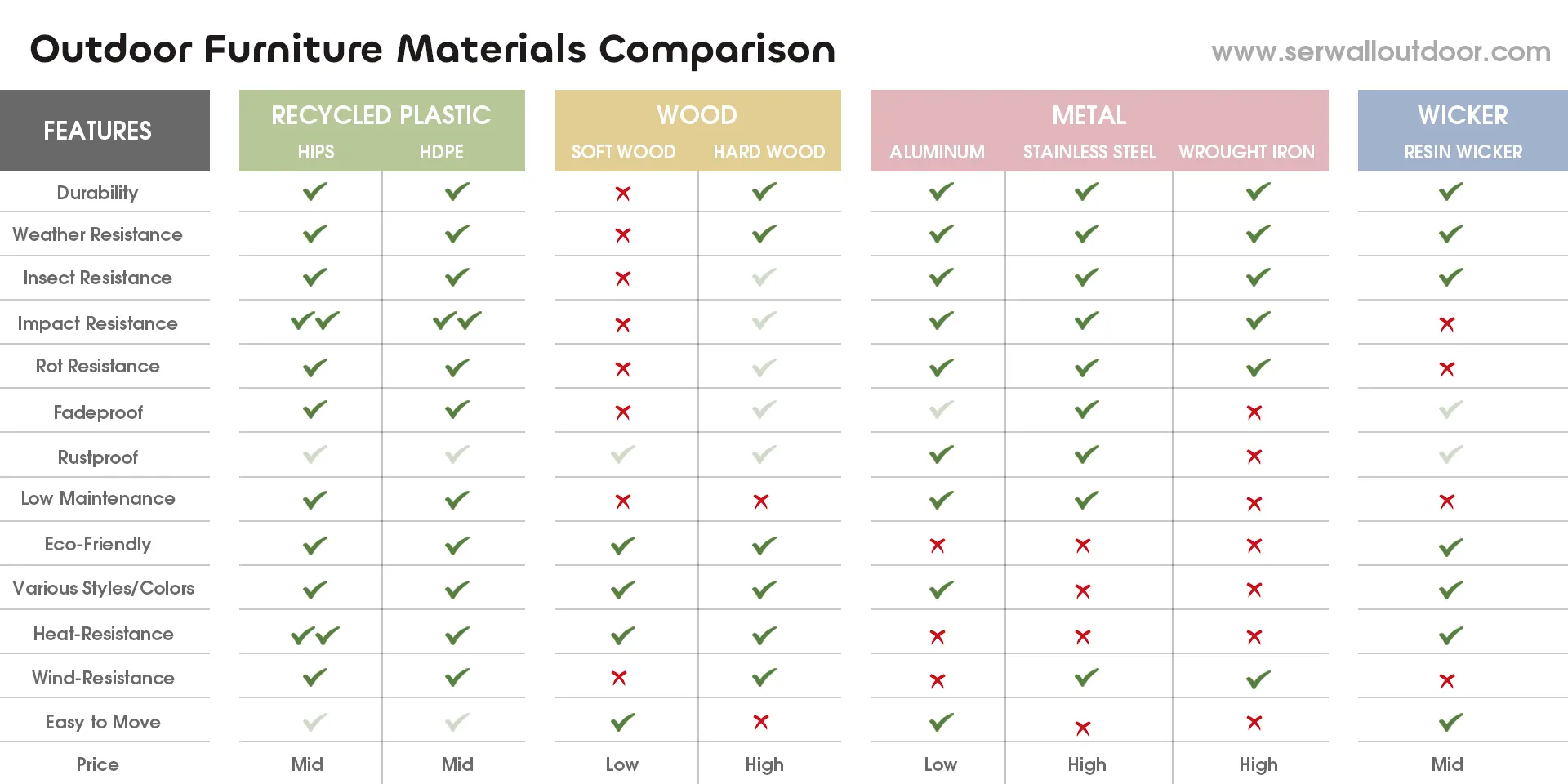
What is the best materials for outdoor furniture? This depends on factors such as your purchasing budget, the weather conditions in your area, etc. If you prefer low maintenance and weather resistance, HDPE plastics, resins, and powder-coated aluminum are the best materials for outdoor furniture. If you prefer the natural beauty of wood grain, wood is the best material for furniture.
We’ve provided a simple comparison of various materials to help you quickly find the right materials for your outdoor furniture.
Durable Outdoor Furniture Materials
Wood, metal, rattan, and plastic are all common material options for outdoor furniture. We’ve compiled the pros and cons of various materials to help you make a better choice.
Wood
Wood is a favored option for outdoor furniture due to its natural beauty, durability, and versatility. It can be divided into two types: hardwood and softwood. There are significant differences between the two.
Softwood

Softwood options include materials such as pine and cedar. It is generally less dense and more affordable than hardwood. However, it is more susceptible to moisture, insect infestation, and UV damage.
Hardwood

Hardwoods are denser and more durable than softwoods. It includes options such as teak, yuppy, eucalyptus, oak, and salsa. Teak is the most popular furniture material among homeowners. Its natural oils enable it to resist rot, insect infestation, and pests. Teak furniture develops a captivating silvery-grey sheen over time.
Metal
Metal materials are popular choices for outdoor furniture. Aluminum, stainless steel, and wrought iron provide long-lasting performance and can withstand various outdoor conditions.
Aluminum

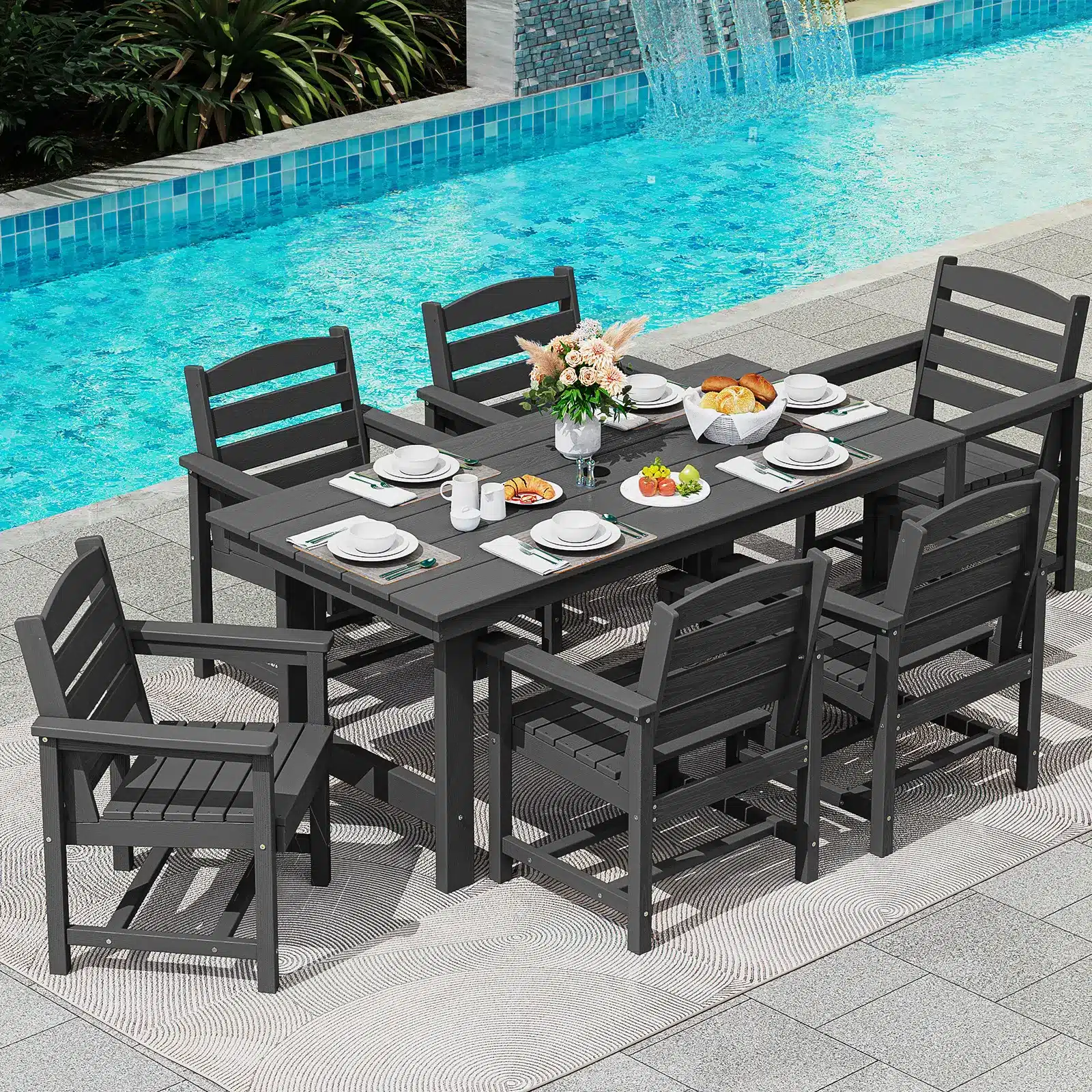
Aluminum is frequently used to create outdoor dining sets, patio sofas, and side tables. Because of its strength, durability, and rust resistance, this material is perfect for usage in coastal areas or near seawater. Outdoor aluminum furniture usually has a protective paint or powder coating on the finish. It can be combined with wicker and wood to create diverse design styles.
Stainless Steel

Stainless steel can withstand the corrosive effects of moisture, rain, and harsh weather conditions without rusting or being damaged. Its substantial weight makes it resistant to tipping over.
Wrought Iron

Made from heated iron forgings, wrought iron can withstand harsh weather conditions such as rain, strong winds, and sun exposure without affecting its structural integrity.
Synthetic Resin Wicker

Resin rattan furniture is made by carefully weaving synthetic fibers (usually polyethylene) to mimic the look and texture of natural rattan. Resin wicker surpasses natural wicker in its resistance to environmental factors such as moisture, UV rays, and temperature fluctuations. However, it is prone to slight wear and tear over time.
Plastic

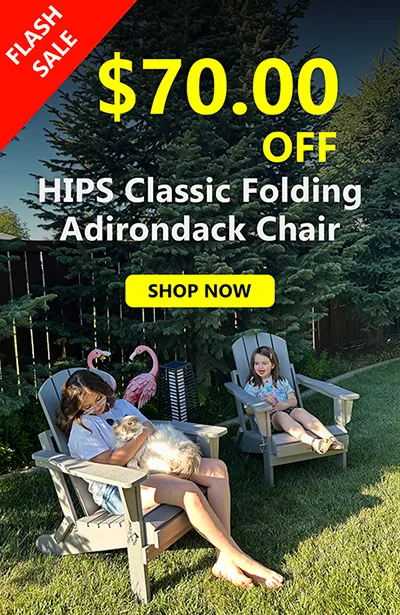
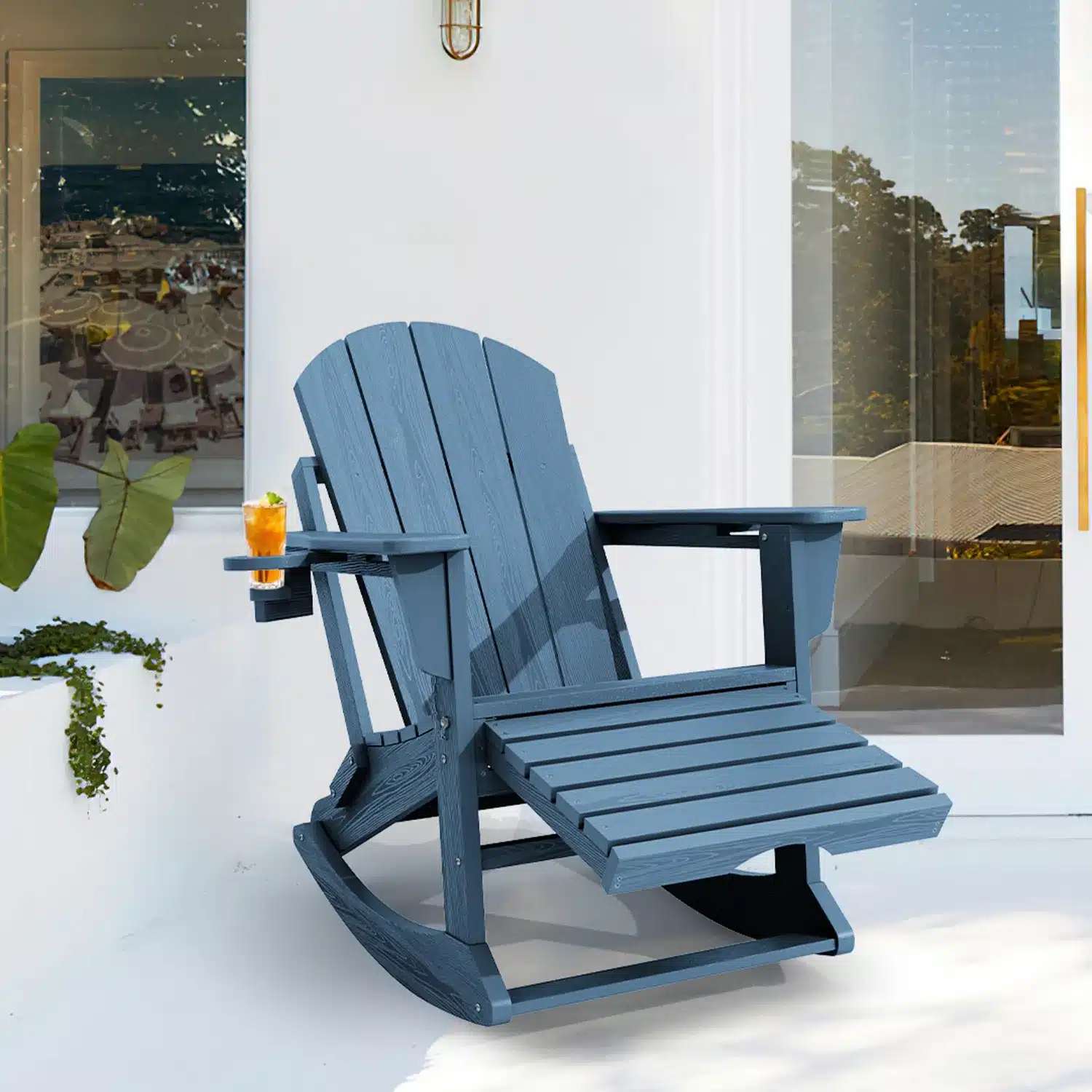
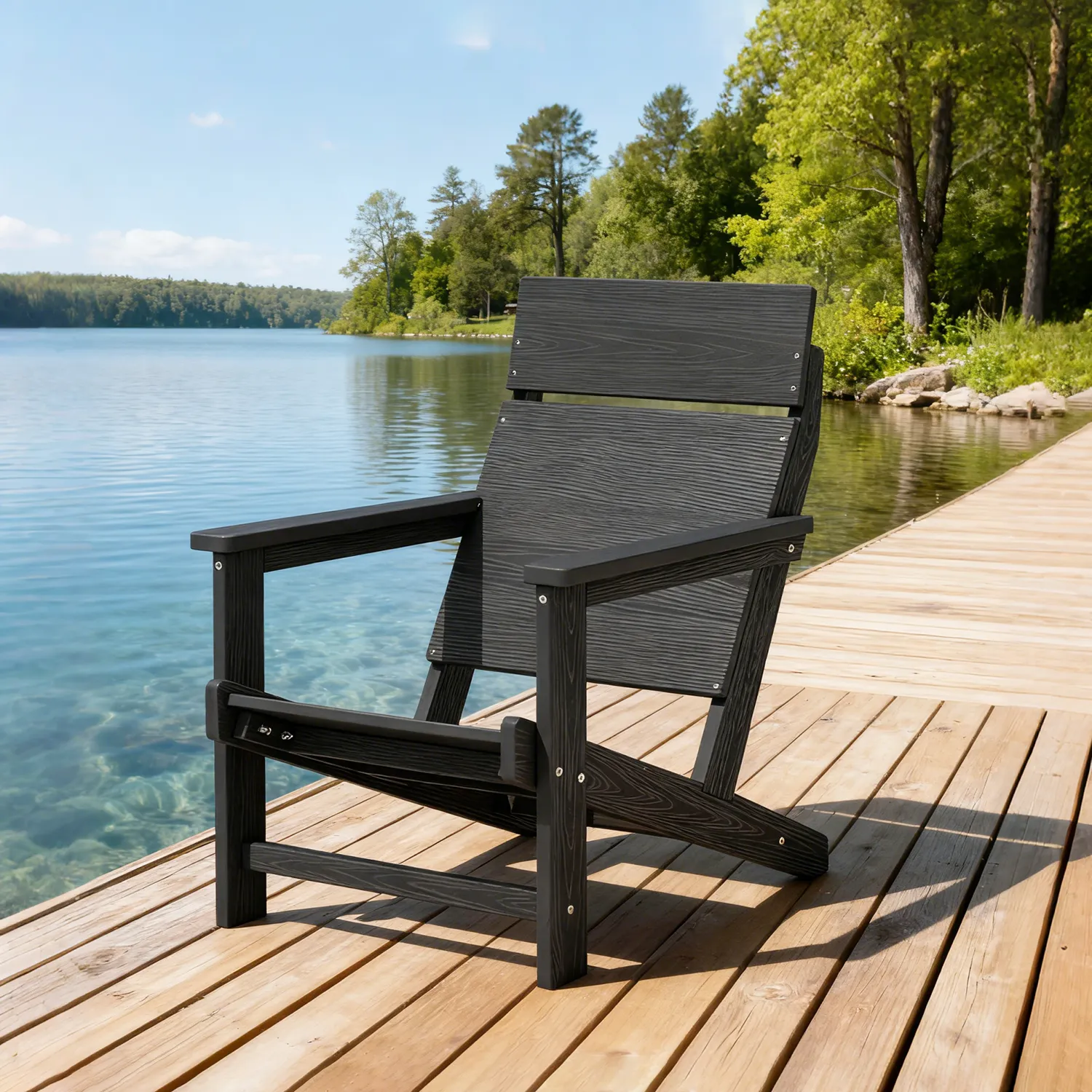
Plastic materials are popular for outdoor furniture due to their durability, weather resistance, and low maintenance requirements. High-density polyethylene (HDPE) and High-impact polystyrene (HIPS) are most commonly used in the manufacture of outdoor furniture.
They have excellent impact resistance and are not easily faded, deformed, rotted, or cracked. Sustainable outdoor furniture made from these materials comes in a wide range of colors and styles to suit various home décor styles.
Outdoor Furniture Upholstery Materials
Common upholstery materials include fabrics like cotton, linen, polyester, microfiber, leather, and synthetic blends. Different materials vary in terms of breathability, texture, stain resistance, and maintenance.You can choose the right upholstery material by considering factors such as weather resistance requirements, desired furniture style, use, etc.
Acrylic Upholstery Fabric

Acrylic upholstery fabrics are mold-resistant, UV-resistant, and fade-resistant. These properties make acrylic furniture fabrics suitable for outdoor environments with humid conditions and long hours of sunshine. Acrylic is available in a variety of colors and patterns and is often used as a raw material for outdoor cushions.
Olefin Upholstery Fabric

Olefin, recognized for its strength and colorfastness, is also resistant to fading, staining, and mildew. Additionally, it boasts quick-drying properties and ease of cleaning, rendering it well-suited for outdoor cushion covers.
Polyester Upholstery Fabric

Polyester is ideal for furniture covers as it is lightweight, affordable, and exhibit resistance to water and UV rays. They provide decent protection against dust, dirt, and light rain. Solution-Dyed Polyester, combining the strength of polyester with solution-dyed technology, ensures excellent color retention, resistance to fading, and protection against UV damage. It offers long-lasting safeguarding for outdoor furniture.
FAQs
1. What is the Most Durable Material for Outdoor Furniture?
In terms of strength and wear resistance, the most durable materials are definitely powder-coated aluminum and teak. Teak is very hard and resists deformation, wear, cracking, rotting, and insect infestation. Although powder-coated aluminum is lightweight, it is strong and resistant to corrosion and rust.
2. What is the Most Weather-resistant Outdoor Furniture?
In terms of weather and rot resistance, HDPE plastic is naturally the most durable material for furniture. HDPE plastic is made from recycled plastic bottles and has excellent weather resistance. HDPE furniture made from it is waterproof, sunproof, and fade-resistant, and can be used in various climatic conditions.
3. What is The Lowest Maintenance Outdoor Furniture?
In terms of cleaning difficulty and maintenance frequency, HDPE plastic furniture is the lowest maintenance outdoor furniture. Simply wipe it with soapy water to keep it clean. Cleaning and maintenance once a quarter is sufficient.