

Creating an inviting and functional outdoor space often starts with choosing the right patio furniture. One of the most essential pieces in any outdoor setting is the patio table. Whether you plan to host lively summer barbecues, enjoy peaceful morning coffees, or gather for evening meals under the stars, your patio table will likely be a central feature.
What is the best material for outdoor table? This article will explore various materials commonly used for patio tables, detailing their advantages, disadvantages, and the best scenarios for each to help you make an informed decision.
Key Considerations for Choosing the Best Material for Outdoor Tables

When selecting the best material for outdoor table, several factors should be carefully evaluated to ensure that your choice aligns with your needs, preferences, and the specific conditions of your outdoor space. Here are the key considerations you should take into account:
- Weather Resistance: One of the most critical factors to consider is how well the material can withstand various weather conditions. Outdoor furniture is exposed to the elements, including sun, rain, wind, and possibly snow or extreme temperatures, depending on your location.
- Durability:Your outdoor table should be able to endure regular use without showing significant wear and tear. The durability of the material affects not only its longevity but also its ability to maintain its aesthetic appeal over time.
- Maintenance: Consider how much effort you’re willing to put into maintaining the table. Some materials require regular upkeep, while others are virtually maintenance-free.
- Aesthetics:The material you choose should complement the overall style and décor of your outdoor space. Aesthetics play a crucial role in creating a cohesive and visually pleasing environment.
- Cost:Budget is always an important consideration when making any purchase. The cost of outdoor patio tables can vary widely based on the material and quality.
- Weight:The weight of the table affects its practicality, especially if you plan to move it frequently or store it during certain seasons.
- Environmental Impact:For eco-conscious buyers, the environmental impact of the material may also be a significant consideration. Teak (if certified by the Forest Stewardship Council) and recycled plastic are more sustainable choices.
Shop Serwall’s Selection of Outdoor Dining Tables and Sets:
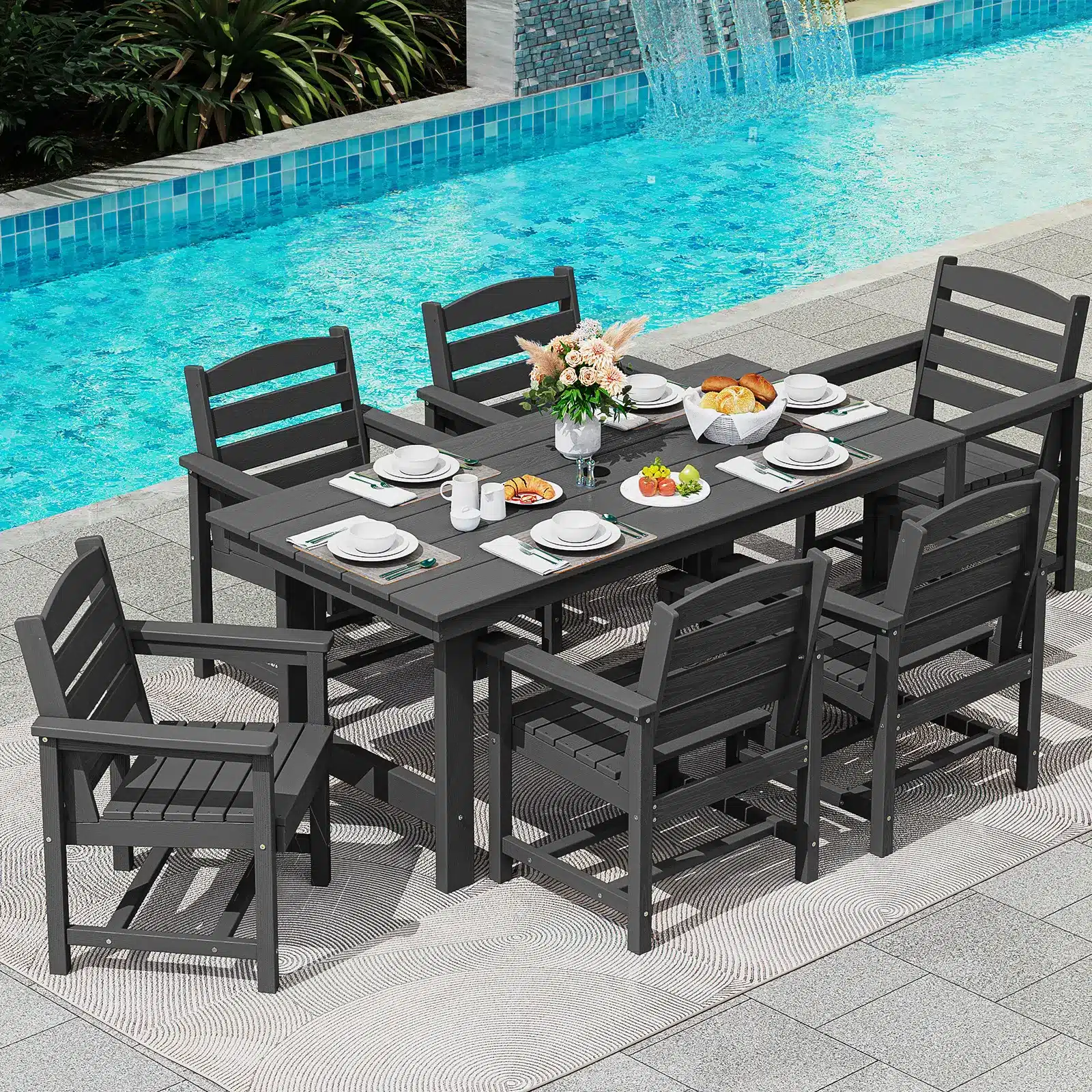
GRANGE HDPE Outdoor 32″ x 67″ Dining Table
$549.99 $399.99
MANOIR 36″ Poly Outdoor Square Dining Table
$329.99
Outdoor Expandable Outdoor Dining Table
$469.99 $399.99
GRANGE 7-Piece Outdoor Dining Set
$1199.99 $899.99
GRANGE 5-Piece Outdoor Dining Set
$999.99 $749.99
Outdoor 6-Seat Dining Sets with Bench and Armchairs
$1299.99 $899.99
7-Piece Expandable Outdoor Dining Table and Armchair Set
$1299.99 $899.99
Common Materials for Outdoor Patio Tables
Learn about common outdoor table types and its features to find the best material for outdoor tables.
1. Wood

Types of Wood:
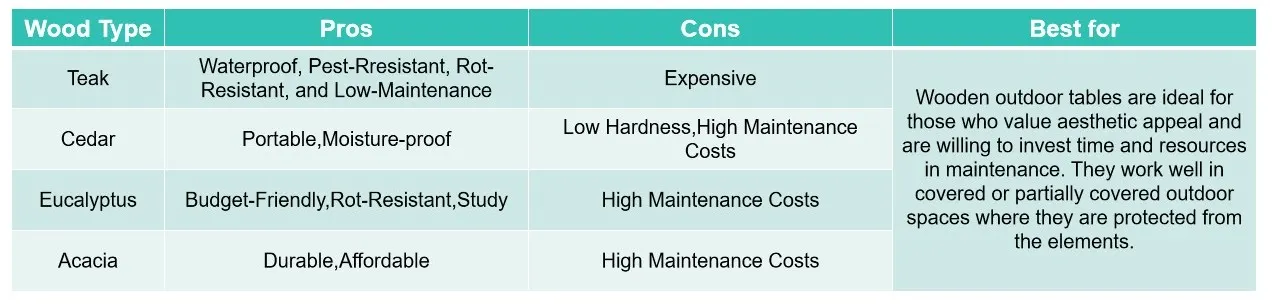
Wood is one of the best material for outdoor tables and is prized for its natural beauty and warmth. Common types of wood used for patio tables include teak, cedar, eucalyptus, and acacia.
- Teak: Teak is renowned for its durability and resistance to weather conditions. Its high oil content makes it resistant to water, insects, and decay, allowing it to maintain its beauty over time with minimal maintenance.
- Cedar: Cedar is lightweight, naturally resistant to moisture, and has a pleasant aroma. It’s less dense than teak, making it easier to move, but it requires regular maintenance to preserve its appearance.
- Eucalyptus: Eucalyptus is a sustainable and budget-friendly alternative to teak. It is dense, rot-resistant, and has a beautiful reddish-brown color, though it requires regular oiling to maintain its appearance.
- Acacia: Acacia is another sustainable option, known for its durability and attractive grain patterns. It is less expensive than teak but requires more maintenance to prevent weathering.
Comparison of Different Wood Types
2. Metal

Types of Metal:
Metal patio tables are favored for their strength and modern appearance. Common metals used include aluminum, wrought iron, and stainless steel.
- Aluminum: Aluminum is lightweight, resistant to rust, and requires minimal maintenance. It’s often coated with a protective finish to enhance durability.
- Wrought Iron: Wrought iron is incredibly strong and offers a classic, ornate look. It is heavier than aluminum and requires regular upkeep to prevent rust.
- Stainless Steel: Stainless steel combines strength with a sleek, contemporary appearance. It is resistant to rust and corrosion but can get hot in direct sunlight.
Comparison of Different Metal Types:

3. Recycled Plastic


GRANGE HDPE Outdoor 32″ x 67″ Dining Table
$549.99 $449.99
Types of Recycled Plastic:
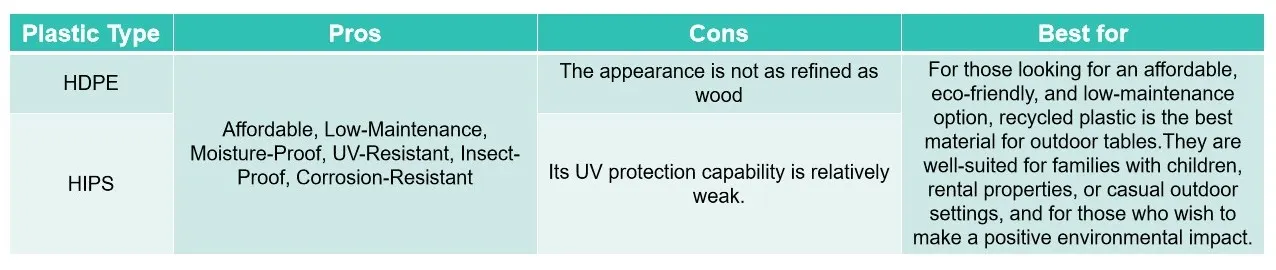
Recycled plastic patio tables are increasingly popular for their environmental benefits, affordability, and ease of maintenance. High-density polyethylene (HDPE) and high-impact polystyrene (HIPS) are commonly used materials in this category.
- HDPE: HDPE is a high-quality, durable plastic made from recycled materials. It is resistant to moisture, stains, and UV rays, making it ideal for outdoor use. HDPE can also mimic the appearance of wood and other materials, providing a versatile aesthetic.
- HIPS: HIPS is a robust, impact-resistant plastic that is also derived from recycled sources. It is known for its durability and ability to withstand harsh weather conditions. While not as UV resistant as HDPE, HIPS is still a reliable option for outdoor furniture.
Comparison of Different Recycled Plastic:
4. Glass

Types of Glass:
Glass patio tables offer a sleek and elegant look, often used in combination with metal or wood frames. The glass can be clear, frosted, or tinted.
Comparison of Different Glass Types:
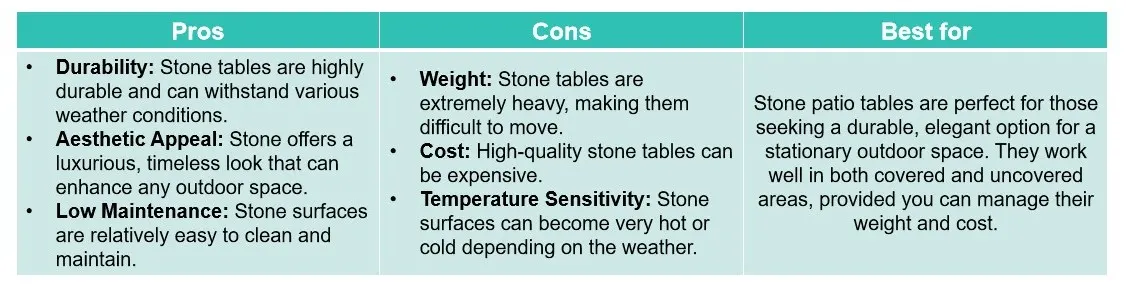
5. Stone

Types of Stone:
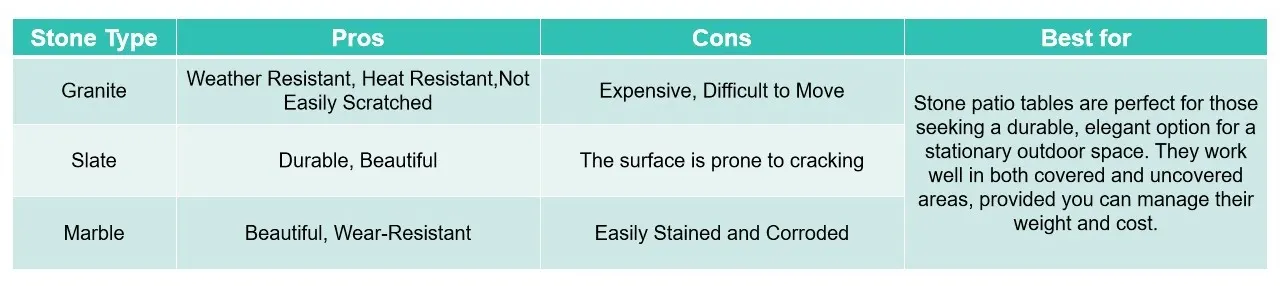
Stone patio tables, including those made from granite, slate, or marble, offer a robust and luxurious option.
- Granite: Granite is extremely durable and resistant to scratches, heat, and weathering.
- Slate: Slate has a unique, textured appearance and is also durable, though it can be more prone to chipping.
- Marble: Marble provides a high-end, elegant look but requires more maintenance to prevent staining and etching.
Comparison of Different Stone Types:
Choosing the Best Material for Your Needs
Selecting the best material for outdoor tables depends on your specific needs, preferences, and budget. Here’s a summary to help you decide:
- For a Classic, Natural Look: Choose wood (teak, cedar, or eucalyptus) if you’re willing to invest time in maintenance.
- For Durability and Low Maintenance: Opt for HDPE, HIPS, or metal (aluminum, steel, or wrought iron) if you want something that withstands the elements with minimal upkeep.
- For Affordability and Versatility: Recycled plastic are great options if you’re on a budget and want easy maintenance.
- For Elegance and Luxury: Stone (granite, slate, or concrete) tables are perfect if you’re looking to add a touch of sophistication and don’t mind the extra weight and cost.
- For a Modern, Sleek Look: Glass tables, especially those made from tempered glass, provide a stylish and easy-to-clean surface.
Final Thoughts
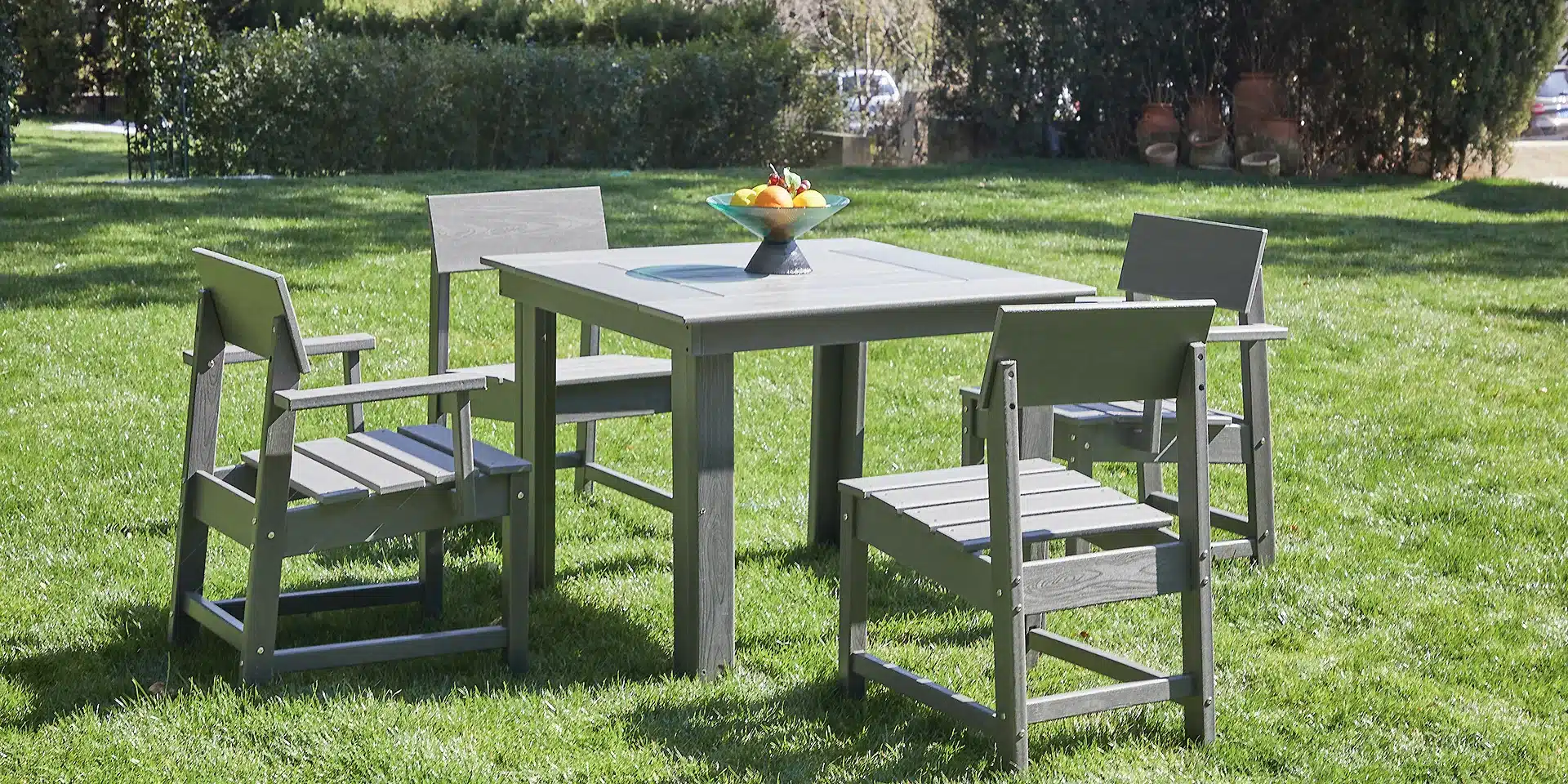
Wood, metal, recycled plastic, glass and stone are the best material for outdoor tables. Carefully consider the pros and cons of each material and your budget to choose the one that best suits you.
No matter which material you choose, regular care and maintenance will extend the life of your outdoor table. Protect your investment by covering your table during extreme weather conditions and cleaning it according to the manufacturer’s recommendations.