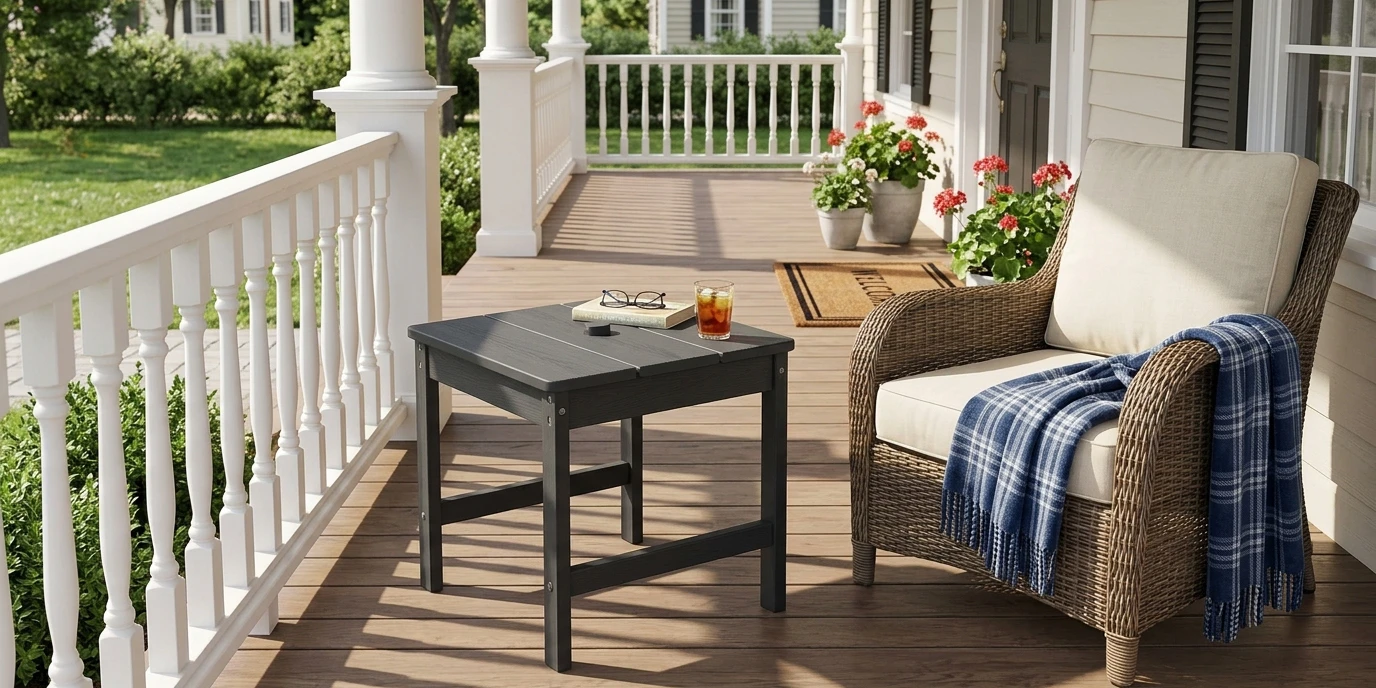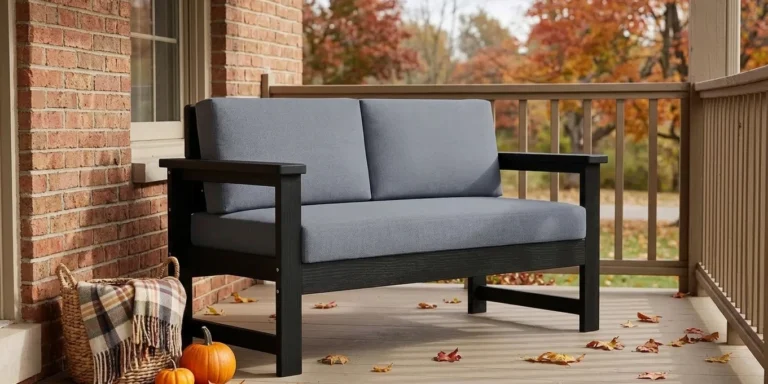

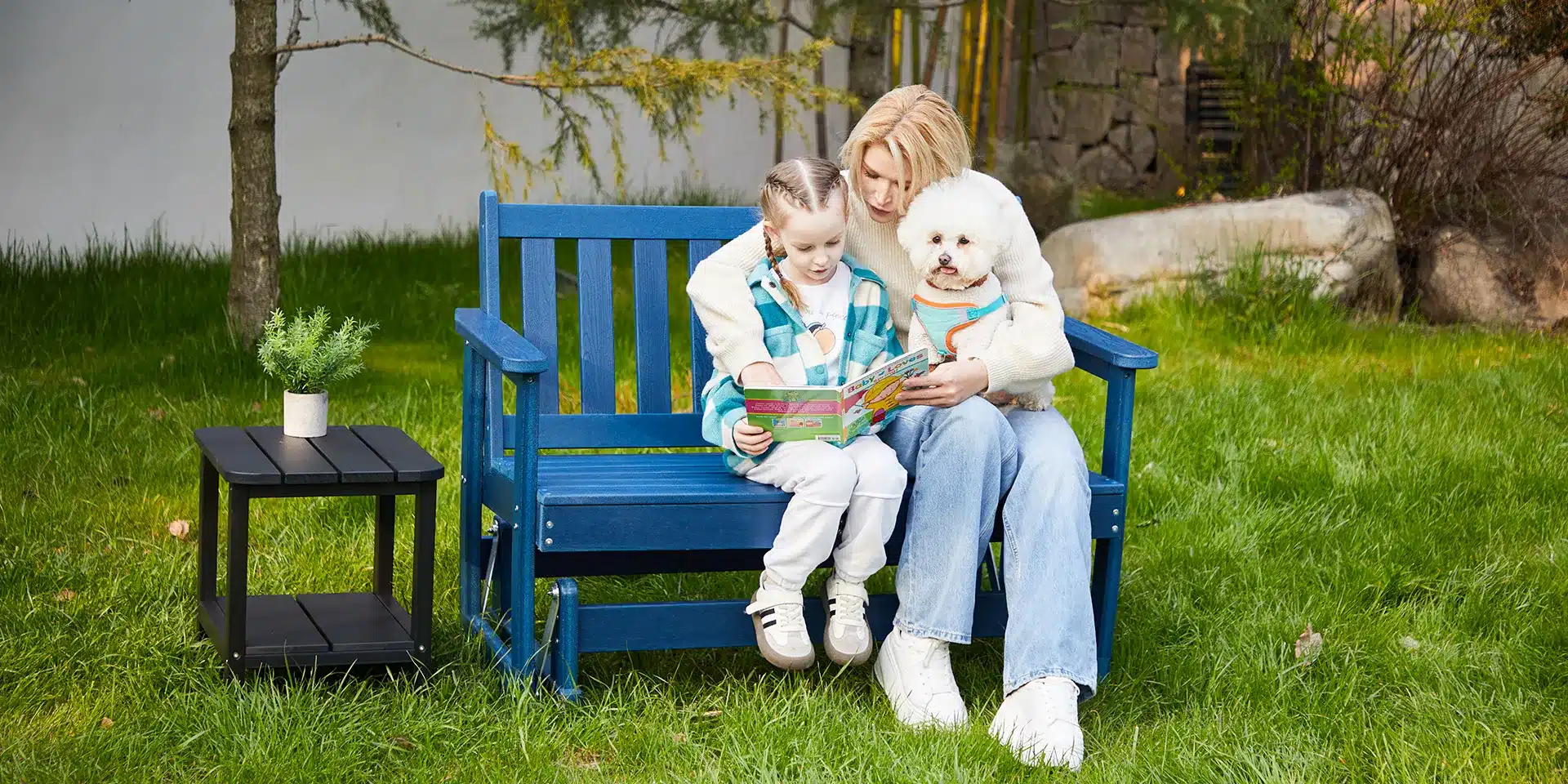
Rocking gently on the front porch to watch the sunrise, spending a peaceful afternoon in the garden, or enjoying a drink with friends on the balcony—outdoor gliders bring lasting relaxation and tranquility to your life. Perfectly combining the rhythmic sway of a rocker with the smooth motion of a porch swing, it is a versatile addition to any outdoor space, including front porches, backyards, gardens, and decks. Let yourself completely unwind in its soothing back-and-forth rhythm and quietly enjoy the passing of time.
How can you quickly find the best outdoor glider for your space? This guide covers the essential factors to look for, including materials, seat sizes, weight capacity, colors, and styles, etc.
Step 1: Is an Outdoor Glider Right for Your Space?
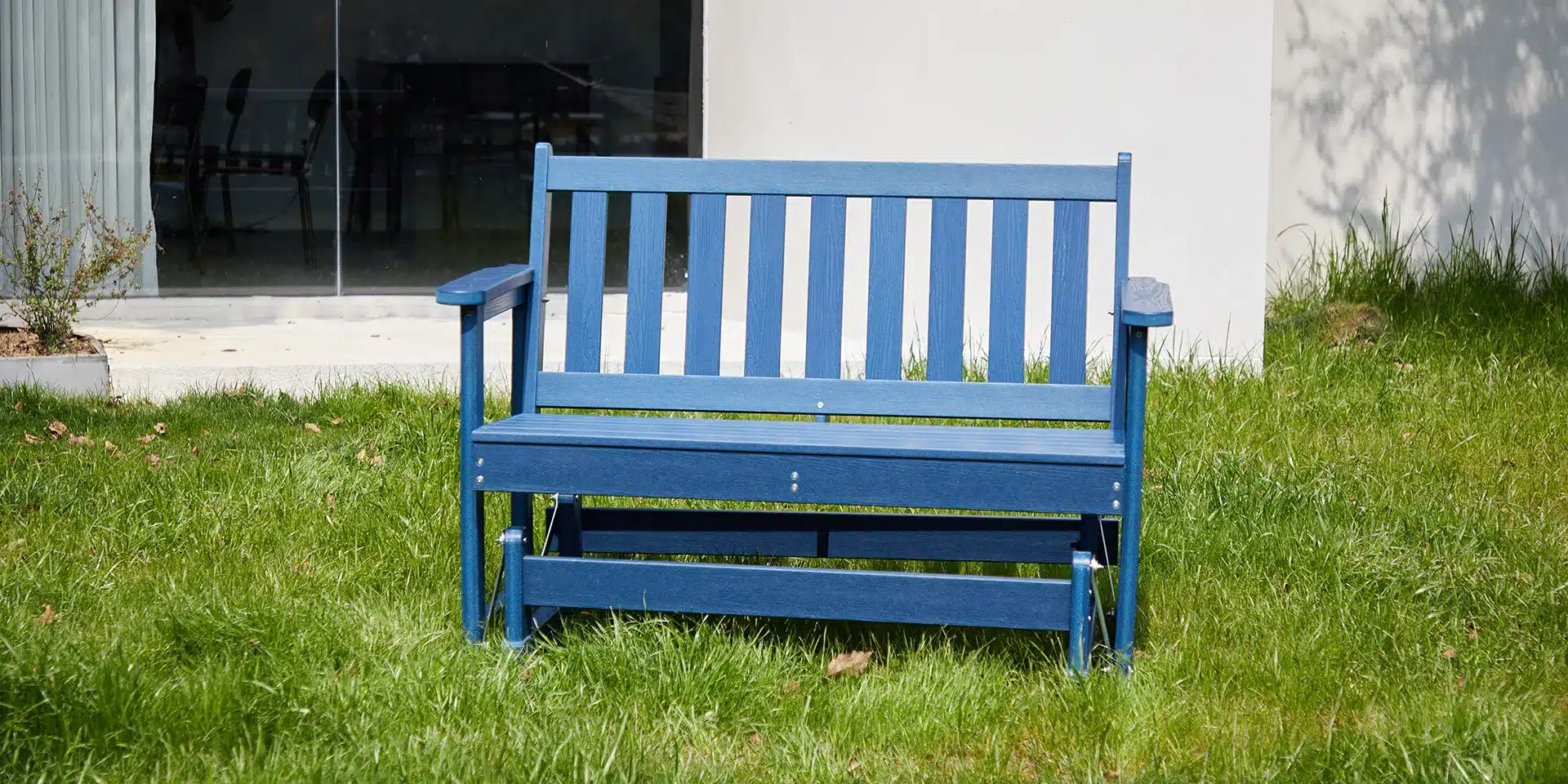
Before purchasing an outdoor glider, consider the following key factors:
- Space: Do you have enough outdoor space to accommodate the glider and allow it to glide back and forth freely?
- Placement: Should it be placed outdoors or in a sheltered area? If placing it outdoors, choose weather-resistant materials to ensure long-lasting durability.
- Purpose: Is it for relaxation or rest? Is it for one person or multiple people?
- Budget: $200, $300, or more? Choose a glider chair brand that fits your budget.
- Maintenance: How much time and effort are planned to be invested in maintenance? Are the materials you choose easy to clean and durable?
Step 2: Determine the Right Glider Size
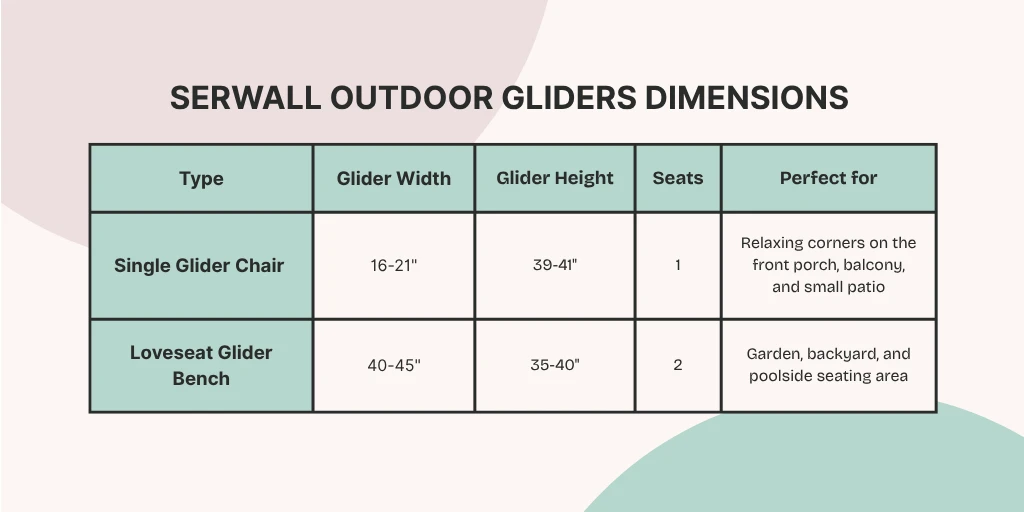
First determine the available outdoor space and the number of guests you want to host, then choose the size of the glider. Although outdoor gliders have a smaller footprint than rocking chairs, you still need to leave 3 to 4 inches of clearance in the front and back for movement.
- Width: Generally, Serwall single gliders range from 16 to 21 inches wide, while double gliders typically measure between 40 and 45 inches.
- Depth: Our gliders feature deep seating, usually reaching 25 to 30 inches, making them a great fit for people of all body types and heights.
- Height: For more comfortable support, consider choosing a glider with a height between 35 and 41 inches.
Step 3: Choose the Right Material for Your Glider Chair
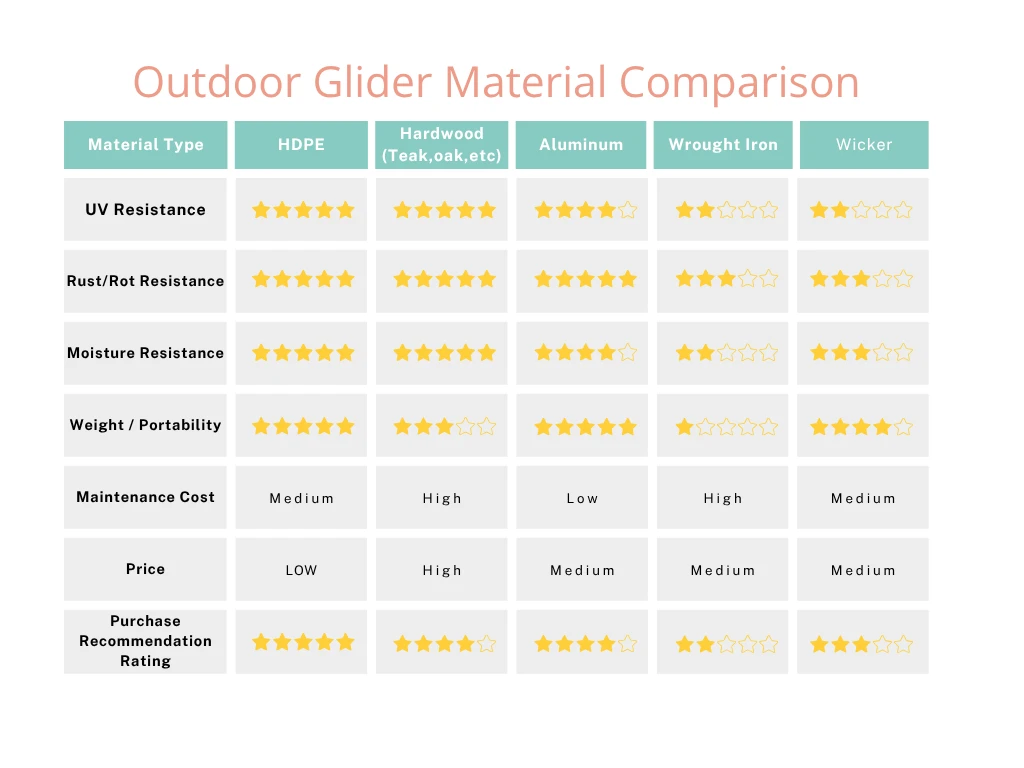
Compared to indoors, outdoor weather and environment are much harsher. Choose weather-resistant and waterproof materials to ensure your glider lasts a long time. Here are some common outdoor glider materials:
High-Density Polyethylene Plastic
Made from recycled plastic bottles and milk bottles, HDPE plastic is widely used in the manufacture of outdoor furniture, outdoor seating, and other outdoor facilities. Durable and low-maintenance, it is one of our main materials. It is not easy to fade, deform or rot, making it the best material for outdoor seating.
Aluminum or Wrought Iron
Aluminum and wrought iron are two common metal materials. Gliders made of aluminum are durable and rust-resistant, but they can be too lightweight and less stable. In contrast, wrought iron gliders are much heavier and harder to move. Wrought iron is also prone to rust, requiring more maintenance time and cost.
Wicker
Wicker refers to a weaving technique, not a specific material. Wicker furniture typically uses bamboo, resin, or willow as materials. They are very lightweight and breathable, but not weather-resistant. Prolonged exposure to strong sunlight can make it brittle and crack.
Teak or Hardwood
Compared to metal and rattan, hardwood is stronger, more durable, and has a longer lifespan. However, hardwood is also more expensive and requires more maintenance than HDPE. It needs to be repainted regularly and stored away from wind and rain.
Step 4: Find a Glider Style You Love
We offer a variety of glider types and features, such as single gliding chairs, loveseat outdoor gliding benches, and 360-degree rotating gliders. Suitable for various outdoor settings such as porches, balconies, poolsides, backyards, or lakesides, etc.
Outdoor Single Glider Chairs
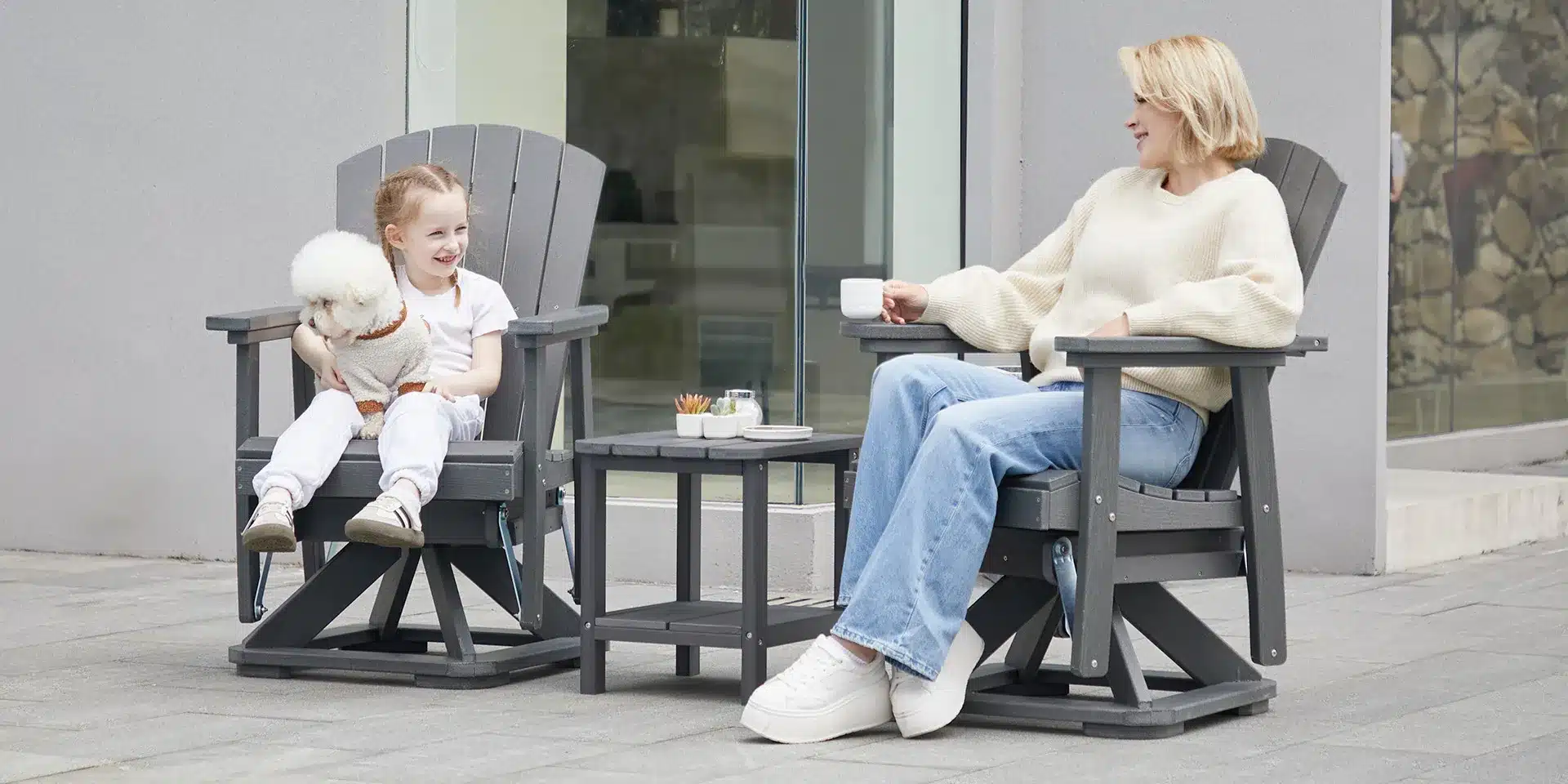
Designed for one person, this single outdoor glider chair creates a relaxing and restful corner on your patio, in your garden, or in your backyard. Combine multiple gliders with coffee tables or side tables to create an outdoor seating area for chatting and gatherings. The 360-degree swivel function allows you to unwind as you glide and spin fully.
Outdoor Glider Benches

Step 5: Choose the Right Glider Color Scheme
Get inspiration from patio decor to decide on the color of your glider. Neutral tones like brown, beige, and gray are excellent choices for vintage or farmhouse-style patios. Colors such as black, white, blue, and green are more suitable for modern and coastal-style patios. Warm colors such as red, yellow, and orange add vibrancy to the patio, perfect for brightly colored themes such as tropical style.
PRO TIPS:
Dark colors such as black and brown absorb heat easily under sunlight, causing gliders to overheat. In sunny areas, light colors such as white and beige are better options. Opt for sun-resistant and fade-resistant materials, such as HDPE.
Step 6: Add Accessories for Extra Comfort
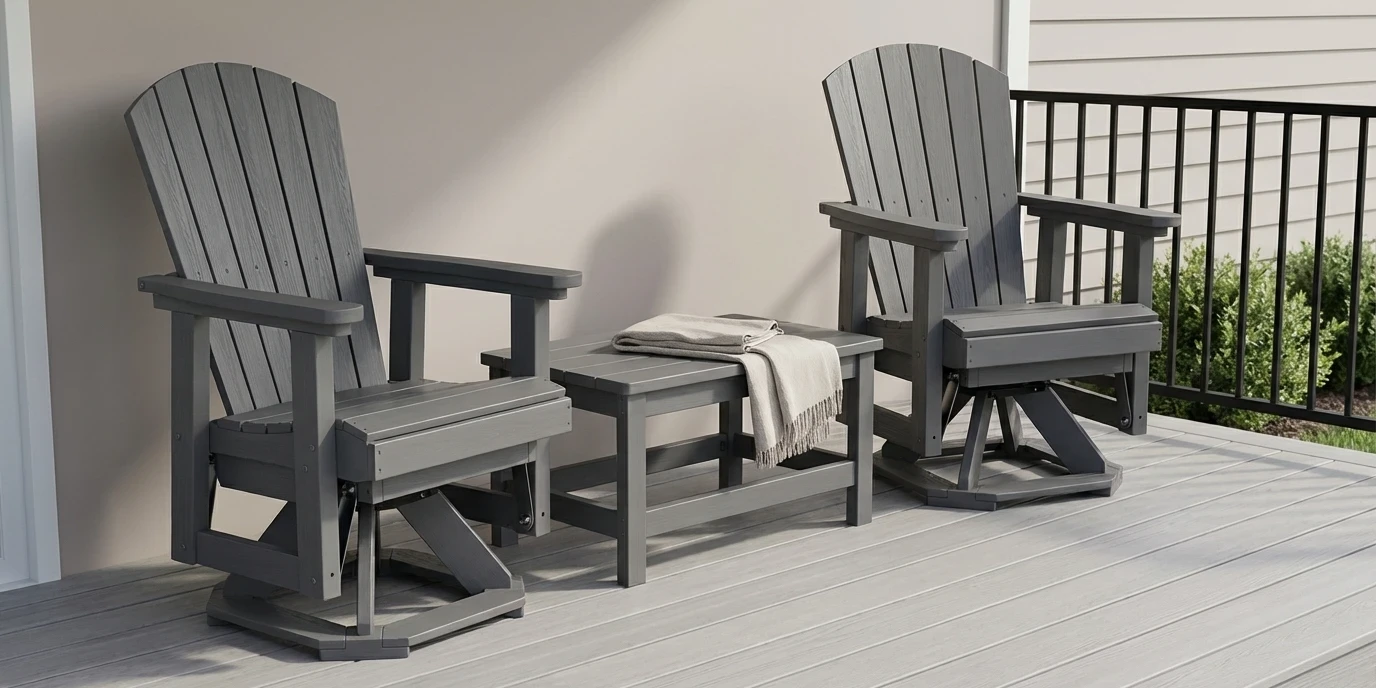
What accessories can make your outdoor glider more convenient and comfortable? Side tables, coffee tables, and cushions are all ideal options. Placing a coffee table next to your single glider chair or gliding bench provides a handy spot for books, drinks, snacks, or potted plants. Adding a weather-resistant seat cushion will keep your glider comfortable for longer. Polyester fiber and high-density sponge are good materials for seat cushion fabrics and fillings.
Shop Outdoor Gliders at Serwall
Maintenance and Storage for Outdoor Glider Chairs
How to store and maintain your outdoor glider to keep it looking new year after year. Here are some detailed care and storage tips for HDPE materials.
- Cleaning and Maintenance: HDPE material does not require regular painting. Simply wipe the frame and seat with warm water or soapy water to keep them clean. Regularly check the sliding structure to ensure it is functioning properly.
- Seasonal Storage: The HDPE glider can be stored outdoors for extended periods. Simply cover it with a protective cover when not in use.